
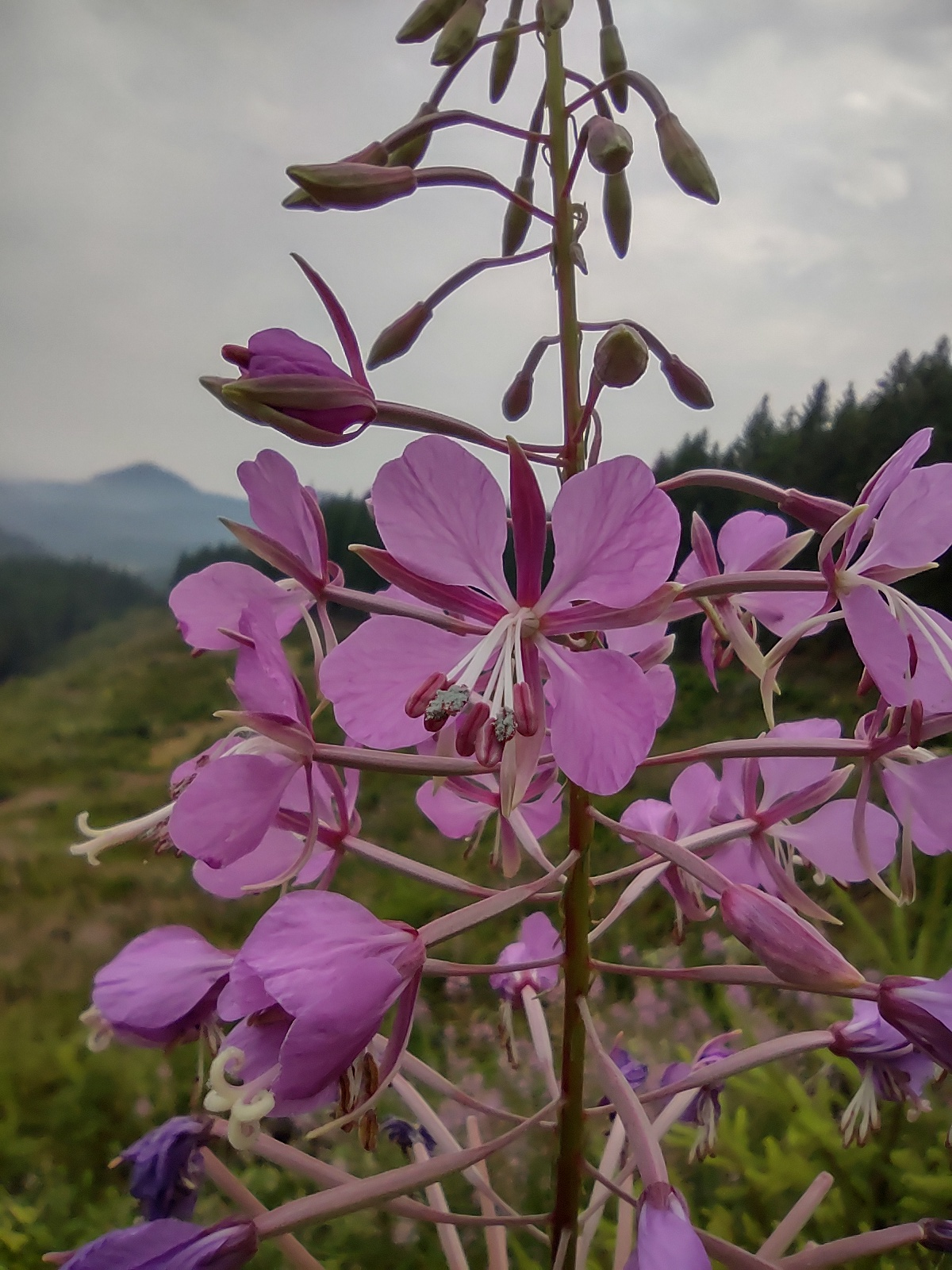

I look forward to June every year as it is the time that fireweed starts to grow. Fireweed, Chamaenerion angustifolia aka Epilobium angustifolia, in the Evening Primrose family, earned its name because after forest fires, it is one of the first plants to establish itself, and you can find it covering large areas of forestland the year.
Fireweed is a beautiful flowering plant with a very long ethnobotanical history. The bright pink flowers are used in jellies and teas. The tender young shoots and leaves can be eaten as a spring vegetable, similar to asparagus. The young leaves can be added to salads and stir-fries. And the leaves can be dried and used for tea.

One of the main historical uses of fireweed leaves was in a tea, prepared by processing the leaves similarly to how traditional Camellia leaves, used for green and black teas, are processed. In Russia and Eastern Europe this was a highly prized beverage known as Ivan Chai. (Sidenote: Ivan Chai does not have any of the spice flavors of a traditional Indian chai, and I discovered that, in many places, the word “chai” simply means tea, and does not specifically refer to the spiced tea we know as chai).

The leaves are hand-rolled and allowed to oxidize for a period of time before drying, similar to the way traditional tea is processed. It is through learning to forage and process fireweed leaves in this traditional manner that the spirit of the fireweed plant forever stole my heart, and I look forward to fireweed season every year with anticipation.
Fireweed leaves processed and prepared in this traditional way yield a beverage that is very similar in taste and mouthfeel to actual black tea produced from Camellia, but fireweed tea lacks the caffeine associated with true teas, so it’s perfect for relaxing and winding down after a long day. Unlike Camellia, fireweed grows in abundance throughout the PNW; maybe even in your own back yard!
Happy foraging! <3